
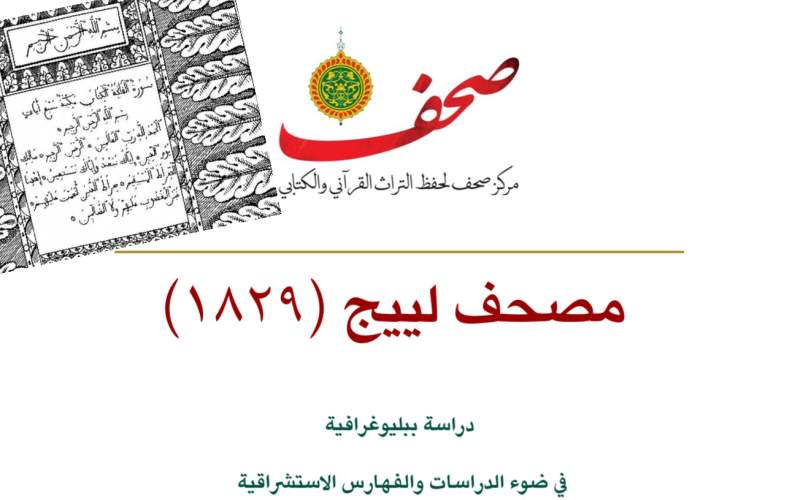
| الملخص تتناول هذه الدراسة (لقراءة الدراسة كاملة إضغط هنا) مصحف لييج المطبوع بالحجر سنة 1829م بوصفه واحدة من أقدم المحاولات الأوروبية لطباعة القرآن الكريم بالتقنية الحجرية، وذلك من خلال مقاربة ببليوغرافية تحليلية تستند إلى الفهارس الاستشراقية والدراسات النقدية الحديثة والمصادر التوثيقية المعاصرة لصدور الطبعة. وتركز الدراسة على تتبع البنية المادية للمصحف، وتحليل خصائصه الخطية والزخرفية، ورصد مظاهر الاضطراب النصي والأخطاء اللغوية التي شابت عملية النسخ والطباعة، مع مناقشة الإشكالات المتعلقة بهوية الناسخ والخلفيات التقنية للمشروع. كما تستعرض الدراسة التوثيق المبكر للمصحف في المجلة الآسيوية الفرنسية سنة 1830م، ثم حضوره في موسوعة فيكتور شوفان الببليوغرافية سنة 1907م، بما يكشف استمرار الاهتمام الاستشراقي بهذا الأثر رغم تعثر المشروع وتوقفه المبكر. وتنتهي الدراسة إلى أن أهمية مصحف لييج لا تكمن في نجاحه الطباعي أو سلامته النصية، بل في قيمته بوصفه وثيقة تاريخية تكشف طبيعة التفاعل بين الطباعة الحجرية الأوروبية والدراسات الاستشراقية للقرآن الكريم في القرن التاسع عشر، وتمثل نموذجًا مبكرًا لما يمكن تسميته بـ«أرشيف الفشل الطباعي» في تاريخ الكتاب المطبوع. الكلمات المفتاحية: مصحف لييج؛ الطباعة الحجرية؛ تاريخ طباعة المصحف؛ الاستشراق؛ الببليوغرافيا؛ تاريخ الكتاب؛ المصاحف المطبوعة؛ فيكتور شوفان؛ بودان ومارتن؛ القرن التاسع عشر. |
Abstract
This study examines the Liège Qur’an printed lithographically in 1829 as one of the earliest European attempts to produce the Qur’anic text through lithographic printing. The research adopts a bibliographical and analytical approach based on Orientalist catalogues, modern critical studies, and contemporary documentary sources related to the publication of the edition. The study investigates the material structure of the Qur’an, analyzes its calligraphic and decorative features, and identifies the textual irregularities and linguistic errors that characterized the copying and printing process. It also discusses the unresolved issue of the copyist’s identity and the technical background of the project. Furthermore, the paper traces the early documentation of the edition in the French Journal Asiatique in 1830 and its later inclusion in Victor Chauvin’s bibliographical encyclopedia in 1907, demonstrating the continued Orientalist interest in this edition despite the project’s early failure and abandonment. The study concludes that the significance of the Liège Qur’an lies not in its textual accuracy or printing success, but in its historical value as a document reflecting the interaction between European lithographic printing and Orientalist Qur’anic studies during the nineteenth century, representing an early example of what may be termed the “archive of printing failure” in book history.
Keywords:
Liège Qur’an; Lithographic Printing; History of Qur’an Printing; Orientalism; Bibliography; Book History; Printed Qur’ans; Victor Chauvin; Bauden and Martin; Nineteenth Century.